Porcelain Pool Coping, Trim Pieces, and Edge Planning for Outdoor Projects
A planning guide for porcelain trim pieces: L-shaped mitered coping, corners, stair treads, risers, and visual continuity around the pool.

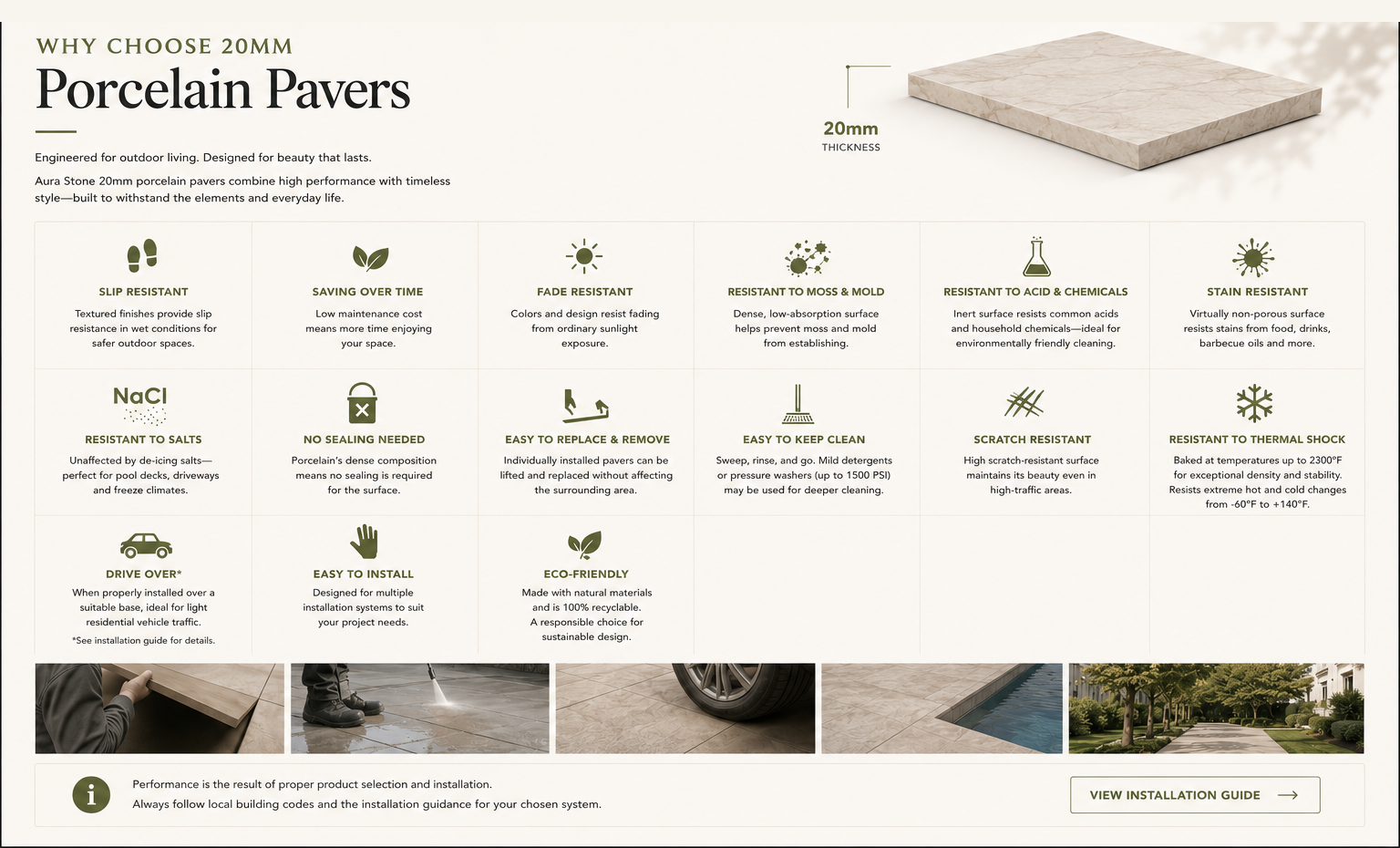
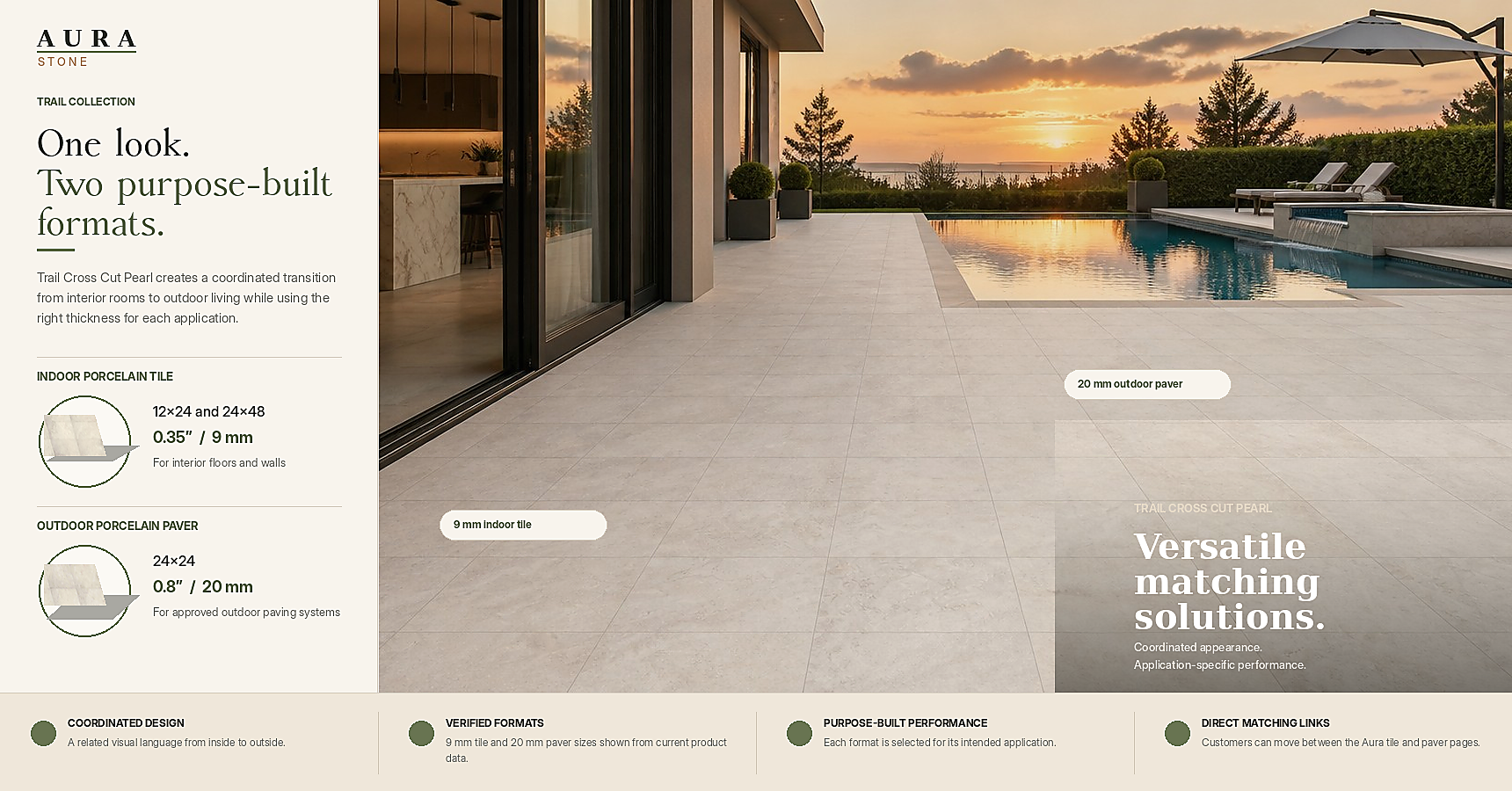
The edge details are what make a pool or outdoor living project feel custom. Pavers cover the field, but coping, stair treads, risers, drain covers, wall caps, and closure pieces decide whether the project looks complete or pieced together.
Coping is the transition between deck and water
Pool coping is not only decorative. It defines the edge, affects comfort, frames the water, and controls how the paver field meets the pool shell. L-shaped profiles can create a cleaner modern face, but they need correct corner planning.
Corners and closures should be counted before ordering
Straight pieces are only part of a pool. Most projects also need inside or outside corners, mitered corners, closure pieces, step details, spa transitions, and sometimes radius planning. Missing trim details can delay installation.
Stairs, risers, and drains can match the field
A coordinated porcelain system can continue the same visual language across stair treads, risers, linear drain covers, and pool coping. This is especially useful when the design goal is calm continuity rather than multiple unrelated materials.
Wall covers protect and finish raised walls
Raised pool walls, planter walls, seat walls, and exterior features often need a cap or cover piece. A cover with a finished edge or drip detail can protect the wall while visually connecting to the paver and coping palette.
Common questions
Should coping be selected before waterline tile?
Coping, waterline tile, plaster, pavers, and veneer should be reviewed together. The best pool palettes are selected as a system, not one item at a time.
Do all pools need L-shaped coping?
No. L-shaped coping is a design choice for a clean modern edge. Some projects may use bullnose, eased-edge, remodel coping, natural stone, or another detail depending on the pool structure and design.