How to Clean Porcelain Pavers Without Damaging the Finish
A porcelain paver cleaning guide for homeowners and contractors covering routine cleaning, pressure washing caution, stains, and grout residue.

Porcelain pavers are chosen partly because they are easier to live with than many porous outdoor materials. Still, the wrong cleaner, aggressive tools, or leftover construction residue can create problems. The best care routine is simple, regular, and gentle.
Routine cleaning should be simple
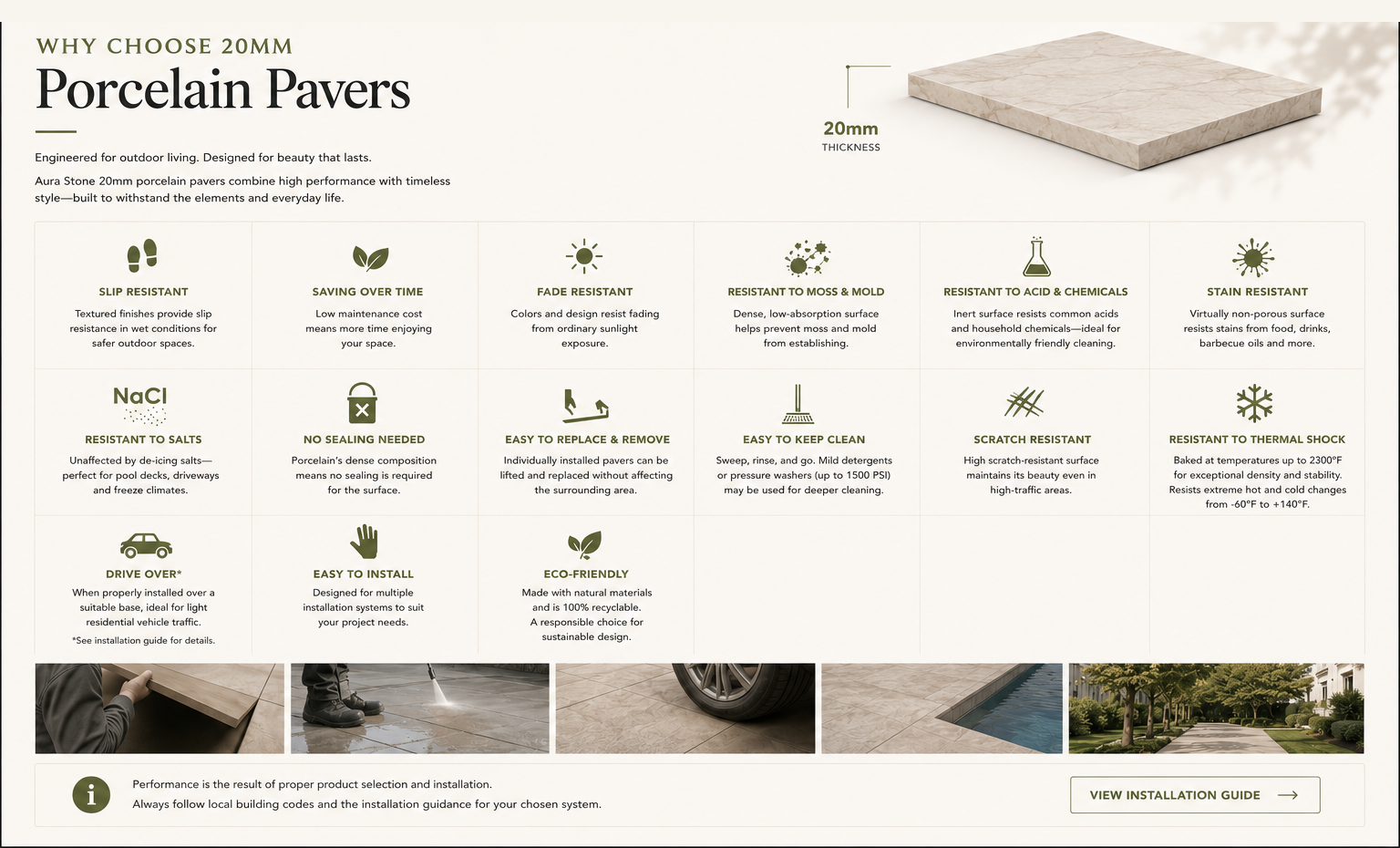
For most patios and pool decks, start with sweeping, blowing, or rinsing loose debris. Then clean with water and a diluted neutral detergent. Rinsing matters because leftover soap can create a film that attracts dirt or changes how the surface feels underfoot.
Pressure washing needs control
A pressure washer can be helpful when used carefully, but the stream should be wide and moderate. A narrow aggressive stream can damage joints, move sand, or create uneven cleaning marks.
Treat stains locally
Do not over-clean the entire floor for one mark. Identify whether the issue is grout haze, rust, organic staining, grease, fertilizer, paint, or construction residue, then use the right product for that specific stain. When unsure, test a small hidden area first.
Common questions
Can I use bleach or acid on porcelain pavers?
Do not make harsh chemicals the first choice. Some porcelain surfaces tolerate certain cleaners better than natural stone, but aggressive products can affect grout, adjacent materials, metal fixtures, or surface appearance. Use manufacturer-approved cleaners and test first.
Why do my pavers look cloudy after cleaning?
Cloudiness can come from soap residue, grout haze, hard water, construction dust, polymeric sand residue, or the wrong cleaner. Rinse thoroughly and identify the cause before applying stronger products.